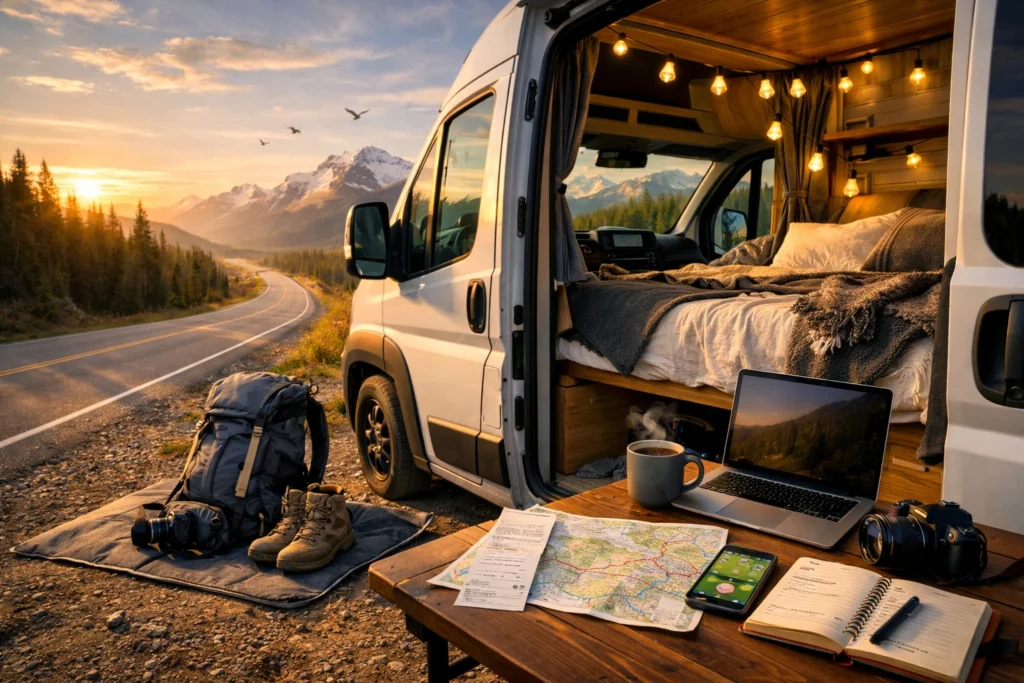
Vanlife draws people who seek freedom on the open road, waking up to new views each day while keeping daily costs lower than fixed rent. We see this lifestyle as a practical choice for those ready to trade stability for adventure, especially across Europe where scenic routes and wild camping spots abound. In Germany and nearby countries, vanlife means navigating autobahns, forest edges, and coastal parks with a well-equipped vehicle.
This guide breaks down the real costs of vanlife from initial purchases to ongoing expenses, alongside road trip tips that help stretch every euro. Whether you plan short getaways or full-time travel, understanding these elements builds confidence for smooth journeys. We focus on European realities, including EU regulations for vehicles and camping, to give you actionable steps grounded in common practices.
Vanlife suits various budgets, from DIY conversions under 25,000 euros to professional builds exceeding 100,000 euros. Monthly outlays often fall between 800 and 3,000 euros, depending on travel distance, food choices, and site preferences. Road trip success hinges on preparation, like mapping fuel stops and water sources, to avoid unexpected hurdles.
Understanding Vanlife Costs: The Full Breakdown
Costs in vanlife split into upfront investments and recurring expenses. Upfront figures dominate for most starters, covering the vehicle and build-out. We recommend budgeting at least 30,000 euros for a reliable setup that handles German winters and long hauls.
Base vans form the foundation. Popular models like the Mercedes Sprinter hold value well, with used options from 25,000 to 60,000 euros ideal for durability on rough Alpine passes. Ford Transit offers balance at 20,000 to 55,000 euros, while Ram ProMaster suits budget urban stays around 18,000 to 55,000 euros. In Germany, check TÜV certification on used vans to ensure roadworthiness.
Conversions add layers of functionality. Basic DIY plumbing and toilets run 500 to 2,000 euros, scaling to 3,000 to 7,000 euros for fixed systems with grey water tanks. Furniture, including foldable beds and compact kitchens, costs 2,000 to 8,000 euros for simple setups, up to 10,000 to 20,000 euros for custom cabinetry. Power systems like batteries and solar panels demand 3,000 to 8,000 euros minimum for off-grid capability, essential for remote Black Forest spots.
Here is a table summarizing van pricing tiers based on common European builds:
| Tier | Total Cost Range (Euros) | Van Type | Conversion Style | Ideal For |
|---|---|---|---|---|
| Budget | 25,000–50,000 | Used high-mileage | DIY basic | Solo weekend trips |
| Mid-Range | 50,000–100,000 | Recent used/new | Modular pro | Couples, remote work |
| Premium | 100,000+ | New 4×4 | Full custom | Full-time family travel |
These ranges account for EU import duties if sourcing from outside, plus VAT on new builds.
Monthly Expenses in Vanlife: What to Expect
Daily vanlife running costs average 800 to 2,000 euros per month for solo travelers in Europe, rising with distance and comforts. Fuel tops the list at 150 to 500 euros, higher on diesel-thirsty Sprinters during frequent drives across Germany to Italy.
Food stays manageable at 300 to 600 euros by cooking simple meals like grilled vegetables, pasta, or wraps. Insurance for camper conversions runs 75 to 200 euros monthly, with German providers like Allianz offering policies tailored to mobile homes. Campsites or parking vary from free wild spots to 600 euros for hookups in peak seasons at Bavarian lakes.
Connectivity and maintenance add 50 to 200 euros each. Phone plans with EU roaming keep you linked for 50 to 150 euros, while routine checks prevent breakdowns. Recreation, like entry to national parks, fits 200 to 500 euros.
A sample monthly budget table for moderate vanlife in Germany:
| Expense Category | Monthly Range (Euros) | Tips to Minimize |
|---|---|---|
| Fuel | 200–600 | Drive efficiently, use apps for cheap stations |
| Food | 250–1,000 | Shop at Lidl or Aldi, prep meals |
| Insurance | 100–200 | Bundle with health coverage |
| Camping | 0–900 | Prioritize free boondocking |
| Maintenance | 40–200 | DIY oil changes where legal |
| Total Average | 800–2,500 | Track via apps like Splitwise |
Full-timers often hit 1,000 to 3,000 euros, especially with health insurance at 200 to 500 euros mandatory in the EU.
Choosing and Equipping Your Van for Vanlife
Select a van that matches your routes. High-roof Sprinters excel in space for standing, vital for tall Germans on multi-week trips. Inspect for rust, common in salty winter roads, and prioritize 4×4 for mountain paths.
Essential gear includes solar panels for power independence, a portable toilet for discreet use, and water jugs for fills at public fountains. Wet wipes handle quick cleans when rivers are nearby, preserving limited tank water.
- Pack light: One jacket suffices; avoid fashion overload in tight spaces.
- Stock easy cooking tools: Grill for veggies and meats minimizes cleanup.
- Carry rubbish bags: Always remove waste to respect nature.
Apps like iOverlander pinpoint free campsites, water dumps, and trails across Europe, with offline maps for remote areas.
Essential Road Trip Tips for Vanlife Beginners
Road trips in vanlife thrive on flexibility. Plan loosely around passions, like hiking the Eifel trails, rather than rigid schedules. Jump in gradually: Test with weekend drives before committing full-time.
Wild camping demands care. In Germany, stay 100 meters from water, pack out trash, and leave sites cleaner. Use apps for legal spots; avoid groups in residential areas to dodge complaints.
Cooking outdoors saves time. Grill fresh produce over campfires when permitted, or stir-fry in the van. Clean dishes immediately with wipes or natural streams to prevent buildup.
Parking strategies matter. Known vanlife hubs foster community, but scout quietly for stealth in towns. Social media groups share real-time EU spot updates.
Preparing Your Vanlife Setup for European Travel
EU rules shape vanlife. Register as a “Wohnmobil” for tax benefits, ensure CO2 compliance, and carry breakdown cover like ADAC. Health insurance covers roadside needs; budget for annual TÜV inspections.
Insulate for cold: Wool blankets and diesel heaters combat frost. Ventilation prevents condensation in humid climates.
Test setups: Rent a campervan first to gauge space and routines.
How Much Does Vanlife Really Cost in Europe?
Vanlife costs start at 25,000 euros for entry-level, with monthlys at 800 euros minimum. Couples average 1,500 to 2,500 euros, per real breakdowns from full-timers. Fuel dips to 30 euros monthly for locals, spikes to 600 for cross-continent drives.
Savings come from no rent, offset by maintenance surprises. Aim for 24,000 euros annual income for comfort.
Is Vanlife Sustainable Long-Term?
Sustainability in vanlife balances freedom with practicality. Minimalism cuts waste; solar reduces grid reliance. Communities reinforce habits like no-trace camping.
Challenges include isolation or repairs, eased by networks. Many sustain years by adapting budgets seasonally.
What Are Common Mistakes in Vanlife Road Trips?
Newcomers overpack, cluttering space and stressing small quarters. Skipping maintenance leads to stranding; budget 100 to 400 euros yearly for funds.
Ignoring weather strands vans in mud; check forecasts via apps. Neglecting social norms, like noisy groups, invites fines in strict German areas.
How Do You Find Safe Camping Spots for Vanlife?
Apps like iOverlander and Park4Night list verified sites with photos and reviews. Filter for free wild camping near water. In Germany, use Stellplatz apps for official pitches.
Scout ahead: Drive daytime, note quiet edges. Join Telegram groups for local intel.
- Verify access roads for van size.
- Note facilities like dump stations.
- Read recent user feedback for changes.
Best Packing List for Vanlife Road Trips?
Core items: Multi-tool, first-aid kit, spare tire, jumper cables. Food staples: Rice, canned goods, spices. Comfort: Sleeping bag rated to 0°C, headlamp.
Layer clothes for variable weather; one versatile outfit per week. Tech: Power bank, EU plug adapters.
Navigating Legal Aspects of Vanlife in Germany and EU?
Germany bans overnight parking in cities without zones; fines reach 100 euros. EU wide, follow “leave no trace” and 48-hour limits on public land.
Insure as motorhome for liability. Carry ID, vehicle papers, and green card for borders.
Meal Planning and Cooking on Vanlife Road Trips
Simple recipes shine: Chop veggies, grill with chicken for one-pan meals. Pasta boils fast; wraps assemble cold. Stock EU staples like quark for protein.
Water conservation: Use biodegradable soap, minimal rinses. Portable stoves handle wind.
Building Community in the Vanlife World
Meet others at rest areas or festivals. Online forums share routes; Instagram tags connect travelers. Respect space; small gestures like shared coffee build bonds.
Vanlife fosters lasting ties amid shared challenges.
Vanlife offers a path to discovery, with costs controlled through smart choices and tips applied daily. From budgeting 800 euros monthly to plotting routes via apps, this lifestyle rewards preparation. Embrace vanlife fully, adapting to its rhythms for rewarding travels ahead.