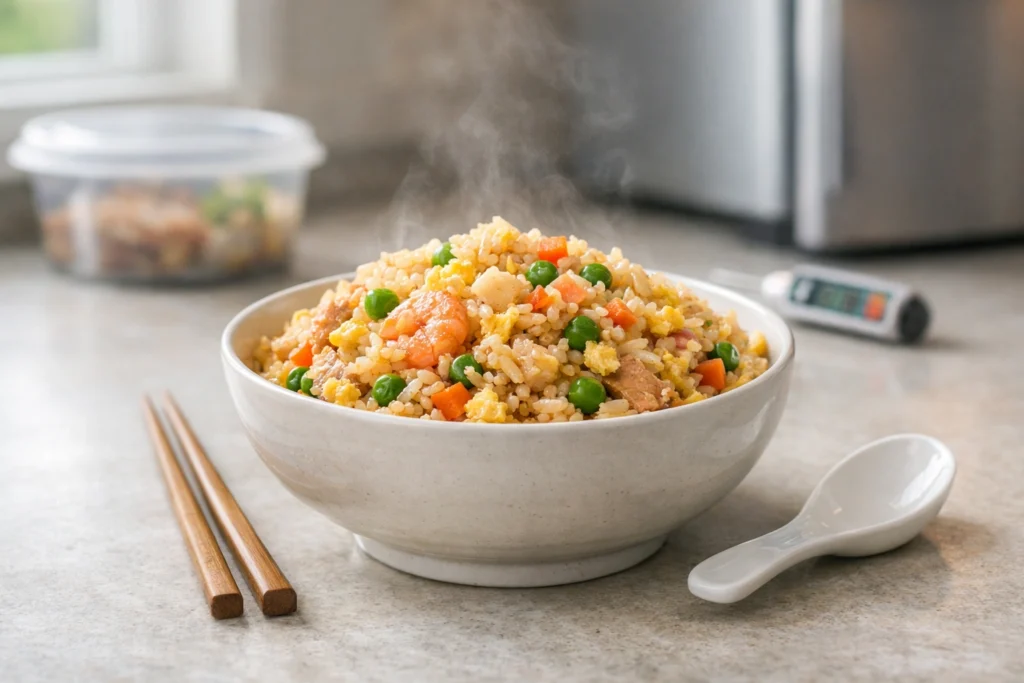
Food poisoning strikes unexpectedly, often after a casual meal of leftovers. One particular form, known as fried rice syndrom, grabs attention because it links directly to everyday habits like cooking rice and storing it improperly. This condition arises from a bacterium that thrives in starchy foods left at room temperature, turning a simple dish into a source of illness. We examine the details here to clarify what fried rice syndrom involves, its origins, and practical steps to avoid it.
The term fried rice syndrom describes a specific type of foodborne illness caused by Bacillus cereus, a rod-shaped, spore-forming bacterium common in soil, dust, and raw rice. These spores endure cooking temperatures that kill most bacteria, only to germinate later under ideal conditions. When cooked rice sits out, the spores multiply rapidly, producing toxins that lead to symptoms. This explains why fried rice syndrom earned its name: the classic scenario of frying rice, letting it cool slowly, and reheating it creates the perfect breeding ground.
Awareness of fried rice syndrom matters because it affects people worldwide, including in Germany where rice features in many households through Asian-inspired meals, takeout, or home cooking. Estimates suggest tens of thousands of cases annually in places like the United States, with similar risks in Europe due to shared food practices. Most cases resolve quickly, but understanding the causes empowers better choices in the kitchen.
What Causes Fried Rice Syndrom
Fried rice syndrom stems from Bacillus cereus contamination, particularly in starchy foods. This bacterium exists naturally in the environment, hitching rides on rice grains from the field. Cooking kills vegetative cells but leaves resilient spores intact. These spores activate when food cools to between 4°C and 60°C, the danger zone where bacteria grow unchecked.
Rice provides an ideal habitat due to its low water activity post-cooking and high starch content, which fuels Bacillus cereus growth. The process unfolds like this: after boiling, rice often sits on the counter to cool, sometimes for hours. In that time, spores germinate, multiply, and produce toxins. Reheating fails to destroy these heat-stable toxins, so illness follows consumption.
Two main toxin types drive fried rice syndrom. The emetic toxin, cereulide, forms in food before eating and targets the upper gastrointestinal tract. It irritates the stomach lining, prompting rapid symptoms. The diarrheal toxins, like enterotoxins, produce inside the body after bacteria survive stomach acid and reach the intestines. These differences explain varying symptom timelines and severity.
Beyond rice, fried rice syndrom risks extend to pasta, potatoes, and cooked vegetables. Meats and sauces can harbor the bacterium too, though starchy bases amplify the threat. In German kitchens, where potato salads or pasta dishes might linger at picnics or buffets, similar vulnerabilities exist. Poor hygiene, such as using unclean utensils, introduces more spores.
Temperature control proves central. Bacillus cereus doubles every 20 minutes at 37°C, producing toxins within hours. EU food safety standards, enforced by bodies like the Bundesinstitut für Risikobewertung (BfR), stress rapid cooling to below 5°C within two hours of cooking. Ignoring this invites fried rice syndrom.
The Science Behind Bacillus Cereus in Fried Rice Syndrom
Bacillus cereus qualifies as a Gram-positive, aerobic, spore-forming rod. Its spores resist boiling at 100°C and even brief microwave exposure. Once germinated, cells produce cereulide, a cyclic peptide toxin stable up to 150°C, explaining why reheating offers no protection against fried rice syndrom.
In the emetic form of fried rice syndrom, cereulide depolarizes mitochondrial membranes in stomach cells, triggering nausea. This preformed toxin acts swiftly, independent of live bacteria. The diarrheal form involves enterotoxins that damage intestinal epithelial cells, causing fluid secretion and inflammation.
Laboratory studies confirm rice’s role: uncooked grains carry up to 10^5 spores per gram. Post-cooking, if held at 25°C for 7 hours, toxin levels reach illness thresholds. This mirrors real outbreaks, like those traced to restaurant fried rice left warming improperly.
Genetic factors influence virulence. Some strains produce more cereulide, heightening fried rice syndrom risk. While not the top gastro cause—norovirus or Salmonella lead—Bacillus cereus accounts for notable cases, especially in summer when ambient temperatures rise.
Symptoms of Fried Rice Syndrom
Symptoms of fried rice syndrom divide into emetic and diarrheal types, each with distinct patterns. The emetic type hits fast, 30 minutes to 6 hours after eating. Nausea builds intensely, followed by repeated vomiting. Abdominal cramps center in the epigastrium, feeling sharp and unrelenting. Diarrhea occurs less often but adds discomfort. Most recover within 24 hours as the toxin clears.
The diarrheal type delays onset to 6-18 hours. Watery diarrhea dominates, often profuse, with crampy lower abdominal pain. Mild fever around 38-38.5°C accompanies systemic effects. Vomiting stays minimal. Again, resolution happens in a day for healthy adults.
Both types cause dehydration risk through fluid loss. In vulnerable groups—infants, elderly, or immunocompromised—symptoms escalate. Rare hepatic involvement elevates liver enzymes like ALT/AST, potentially leading to failure in extreme cases.
Extraintestinal effects, though uncommon in foodborne fried rice syndrom, include endophthalmitis from eye injuries with contaminated objects. Inhalation or IV routes cause pneumonia, endocarditis, or bacteremia, but these fall outside typical dietary exposure.
| Symptom Type | Onset Time | Key Symptoms | Duration |
|---|---|---|---|
| Emetic | 30 min – 6 hrs | Nausea, vomiting, epigastric cramps | Up to 24 hrs |
| Diarrheal | 6 – 18 hrs | Watery diarrhea, lower cramps, mild fever | Up to 24 hrs |
This table outlines differences for quick reference, aiding recognition during an episode.
How Fried Rice Syndrom Develops in the Kitchen
Picture preparing a large pot of rice for dinner. It steams on the stove, then rests on the counter as guests arrive. Hours pass before refrigeration. By morning, reheated portions carry invisible toxins, setting the stage for fried rice syndrom. This sequence repeats in homes and eateries globally.
In Germany, summer barbecues or office potlucks heighten risks. Rice salads with mayo sit in the sun, spores flourish. Takeout fried rice, delivered warm and left uneaten, follows suit. The bacterium needs no special invitation; it arrives via grains or handling.
Outbreaks illustrate patterns. A 2008 case involved a young woman who died after consuming contaminated pasta, underscoring severity in outliers. Most endure misery but rebound. Differentiating fried rice syndrom from stomach flu proves tricky—both inflame the gut—but rapid onset post-rice points to Bacillus cereus.
Prevention Strategies for Fried Rice Syndrom
Preventing fried rice syndrom relies on temperature management and hygiene. Cool cooked rice swiftly: spread it thinly on trays and refrigerate within two hours. Aim for below 5°C promptly.
Reheat thoroughly to 74°C core temperature, steaming until piping hot. Portion leftovers into small containers for faster chilling. Avoid room-temperature storage beyond two hours, or one hour above 32°C.
- Use clean utensils and surfaces to minimize spore introduction.
- Rinse raw rice thoroughly, though spores persist.
- Consume rice within 24 hours of cooking; discard if doubtful.
- In commercial settings, follow HACCP principles for monitoring.
These steps align with EU Regulation 852/2004 on food hygiene, reducing fried rice syndrom incidence effectively.
Rare Complications from Fried Rice Syndrom
While fried rice syndrom typically self-limits, complications arise in at-risk individuals. Dehydration demands oral rehydration solutions. Persistent vomiting risks aspiration. In infants or the elderly, hospitalization ensures IV fluids.
Hepatotoxicity from high cereulide doses elevates transaminases, mimicking acute liver injury. Immunocompromised patients face bacteremia spread. Though rare, these warrant medical attention if symptoms exceed 24 hours or worsen.
What Should You Do If You Suspect Fried Rice Syndrom
Suspecting fried rice syndrom calls for rest and hydration. Sip clear fluids like oral rehydration salts, available at German pharmacies as Elektrolytlösungen. Avoid dairy or caffeine, which irritate further. Bland foods like bananas or toast ease return to eating.
Seek care if dehydration signs appear: dry mouth, dizziness, reduced urine. Children under five or adults over 65 need prompt evaluation. Stool tests confirm Bacillus cereus, though rarely needed for mild cases. Antibiotics hold little value against toxins; supportive care suffices.
Is Fried Rice Syndrom Common in Germany
Fried rice syndrom occurs sporadically in Germany, often underreported as generic gastro. BfR monitors foodborne illnesses, noting Bacillus cereus in rice-related cases. Rising popularity of sushi, stir-fries, and meal preps increases exposure. EU-wide surveillance shows low but steady incidence, preventable with proper habits.
Can You Get Fried Rice Syndrom from Other Foods
Yes, fried rice syndrom affects pasta, noodles, and starchy leftovers beyond rice. Cooked veggies like corn or beans host Bacillus cereus too. Meat sauces or dairy puddings qualify if stored poorly. The key remains starch and slow cooling.
How Long Does Fried Rice Syndrom Last
Fried rice syndrom endures 12-24 hours typically. Emetic symptoms peak early, fading quickest. Diarrheal type lingers slightly longer but resolves without intervention. Full recovery follows, barring complications.
Treatment Options for Fried Rice Syndrom
No specific antidote exists for fried rice syndrom. Management focuses on symptoms. Antiemetics like metoclopramide ease vomiting, prescribed if severe. Loperamide controls diarrhea cautiously, avoiding toxin retention. Hospitalization provides IV therapy for extremes.
Over-the-counter remedies help mildly affected individuals. Probiotics may shorten duration anecdotally, though evidence varies. Consult a Hausarzt for tailored advice, especially in Germany’s accessible healthcare system.
In closing, grasping fried rice syndrom causes and facts equips us to enjoy rice safely. Simple practices like rapid cooling and reheating thwart this preventable illness, ensuring meals nourish rather than harm. Stay vigilant in storage, and fried rice syndrom poses minimal threat.