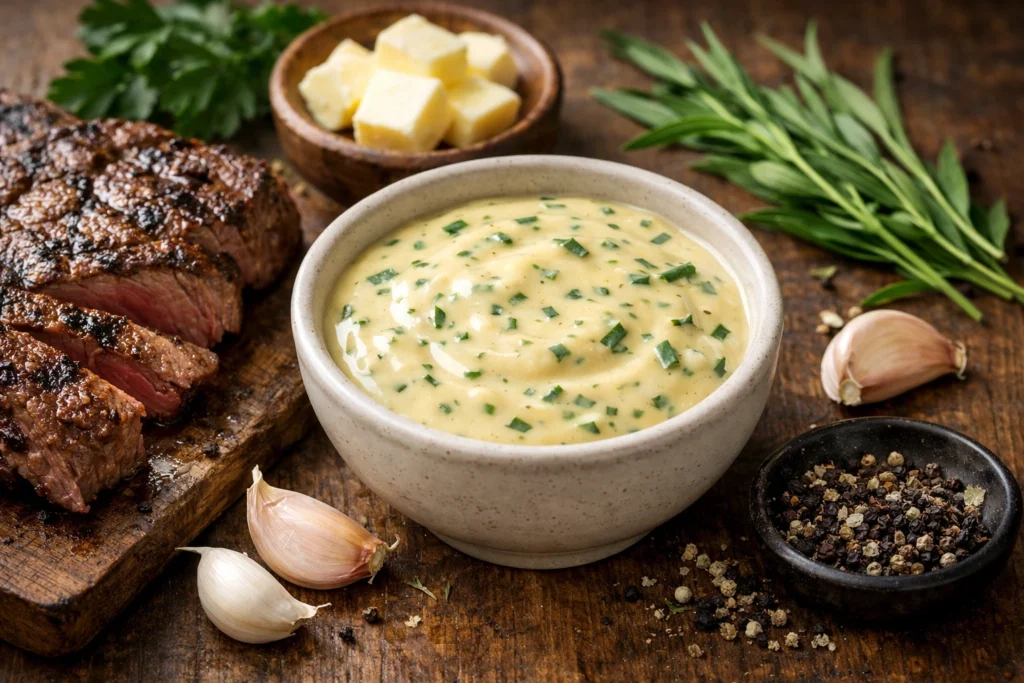
Cafe de paris sauce has a special place in many European kitchens, including here in Germany. The rich, buttery taste, the gentle heat from curry and mustard, and the fresh herbs give a steak or grilled vegetables a feeling of eating in a good brasserie. Even if the name sounds a bit fancy, cafe de paris sauce is easy to prepare at home when we follow a clear method and a few classic rules.
What is cafe de paris sauce and why do we love it?
Cafe de paris sauce is a flavored butter sauce, originally served with steak in Swiss and French restaurants. It is not a thin, liquid sauce like pepper sauce, but a thick butter mixture that gently melts over hot meat or vegetables. The taste is complex: buttery, slightly spicy, a bit tangy from mustard, and full of herbs and aromatics.
In many German homes, we know similar herb butters from the grill season. Cafe de paris sauce goes a step further. Besides herbs, it includes ingredients like anchovies, capers, curry powder, Worcestershire sauce and sometimes cognac or Madeira wine. These parts give depth and a light umami taste that we normally expect in restaurant food.
Key ingredients for an authentic cafe de paris sauce
There are many variations, but a classic cafe de paris sauce usually includes:
- Butter: The base of the sauce. Use good quality unsalted butter, with at least 82 percent fat.
- Shallots or onions: Very finely chopped and gently cooked to remove sharpness.
- Garlic: Gives a warm, savory note, but should never dominate.
- Fresh herbs: Typically parsley, chives, tarragon, sometimes chervil.
- Anchovies and capers: Provide umami and a mild saltiness, not a strong fish taste.
- Mustard and curry powder: They create the characteristic spice and color of cafe de paris sauce.
- Acid components: Lemon juice or vinegar for balance.
- Optional spirits: Cognac, brandy, white wine or Madeira for extra aroma.
We find all of these ingredients easily in German supermarkets. The magic lies not in rare products, but in the way we combine and balance them.
Classic cafe de paris sauce recipe (step by step)
Below we share a traditional style recipe for cafe de paris sauce, adjusted for home kitchens. It works well for steak, roast beef, lamb, grilled chicken and even roasted vegetables or baked potatoes.
Ingredients for cafe de paris sauce (about 6 portions)
For best taste, we prepare the sauce a few hours in advance so the flavors can develop.
- 250 g unsalted butter, soft at room temperature
- 1 small shallot, very finely chopped
- 1 small garlic clove, very finely chopped or pressed
- 4 anchovy fillets in oil, drained and finely chopped
- 1 tablespoon capers, chopped
- 2 tablespoons fresh parsley, finely chopped
- 1 tablespoon fresh chives, finely sliced
- 1 teaspoon fresh tarragon, finely chopped (or 1/2 teaspoon dried)
- 1 teaspoon Dijon mustard
- 1 teaspoon mild curry powder
- 1 teaspoon Worcestershire sauce
- 1 teaspoon tomato paste (optional, for color)
- 1 teaspoon lemon juice, freshly squeezed
- 1 pinch sweet paprika powder
- Salt and freshly ground black pepper to taste
Preparation method
We follow this method to make a smooth, aromatic cafe de paris sauce:
- Prepare the butter: Take the butter out of the fridge at least 30 minutes before use. It should be soft enough to mix with a fork, but not melted.
- Cook shallots gently: In a small pan, add 1 teaspoon of butter. Add the finely chopped shallot and cook on low heat until glassy and soft, not brown. Let it cool completely.
- Combine aromatics: In a small bowl, mix garlic, anchovies, capers, herbs, curry powder, mustard, Worcestershire sauce, tomato paste, lemon juice and paprika. Stir until well combined.
- Beat the butter: Place the soft butter in a larger bowl and beat it with a fork or hand mixer until creamy and slightly pale.
- Mix everything together: Add the cooled shallots and the aromatic mixture to the butter. Stir or beat until all ingredients are evenly spread in the butter. Season with salt and black pepper. Remember, anchovies and capers are already salty, so taste carefully.
- Shape and chill: For cafe de paris sauce as a compound butter, place the mixture on baking paper, form a roll and wrap it tightly. Chill for at least 2 hours in the fridge.
This is the base cafe de paris sauce in butter form. We can serve it as slices on hot grilled meat, or we can turn it into a warm, semi-liquid sauce.
How to serve cafe de paris sauce
There are two popular serving styles for cafe de paris sauce in restaurants and at home.
Cafe de paris butter on steak
This is the most common method in Germany. We cook the steak to the desired level, place it on a warm plate and put a thick slice of chilled cafe de paris sauce on top. The heat of the meat slowly melts the butter and creates a fragrant pool that mixes with the juices of the steak. Many of us first tasted cafe de paris sauce in this way in a steakhouse.
Warm cafe de paris sauce in a small pot
Some places serve cafe de paris sauce as a warm, slightly foamy sauce. For this we do the following:
- Warm 100 ml cream or a mix of cream and a little white wine in a small pot.
- Take it off the heat and whisk in 4 to 6 tablespoons of the cafe de paris butter until it is melted and smooth.
- Keep the sauce warm on very low heat, but do not boil, or the sauce can split.
This version is excellent with roast beef, lamb racks, chicken breast or even on top of grilled asparagus.
Popular variations of cafe de paris sauce
No single recipe is the only truth. Many chefs and home cooks in Germany and abroad adapt cafe de paris sauce to their taste. Here are some common variations and how they change the flavor.
Mild cafe de paris sauce without anchovies
For guests who do not like fish, we can simply leave out the anchovies and use a bit more capers and mustard. The sauce becomes slightly less intense, more similar to a strong herb butter, but still keeps the cafe de paris character from the curry and herbs.
Cafe de paris sauce with brandy or cognac
Adding 1 to 2 tablespoons cognac or brandy to the shallots while cooking gives a warm, round aroma. The alcohol evaporates as we cook, leaving only the taste. This is especially good if we serve the sauce with roast beef or venison.
Cafe de paris sauce with fresh chili
For people who enjoy a bit of heat, we finely chop a small red chili and add it to the mixture. It should stay in the background, not dominate. German guests who like spicy food often appreciate this twist, especially with grilled chicken or pork.
Vegetarian and pescetarian adjustments
Strict vegetarians often prefer to skip anchovies and Worcestershire sauce (which usually contains fish). We can replace them with:
- Extra capers and a dash of soy sauce for umami
- Smoked salt for a gentle smoky note
- Vegan Worcestershire sauce varieties from the organic shop
For pescetarians, anchovies are no problem, and the classic cafe de paris sauce works well with grilled salmon or baked trout.
Tips for perfect cafe de paris sauce at home
Even small mistakes can change the texture and taste of cafe de paris sauce. We share some practical tips from European home kitchens that help to avoid problems.
Use room temperature ingredients
The butter must be soft, and the cooked shallots completely cooled. If we add warm shallots to cold butter, the butter starts to melt unevenly and we lose the creamy structure.
Chop everything very finely
Shallots, garlic, anchovies, capers and herbs should be almost like a paste. Large pieces feel rough on the tongue and can dominate one bite. A sharp knife or small food processor is helpful, but we must be careful not to turn it into mush.
Balance salt and acid carefully
Anchovies, capers and Worcestershire sauce already contain salt. We always taste before adding more. Too much salt can ruin even the best cafe de paris sauce. The lemon juice gives freshness, but if we add too much, the butter flavor disappears.
Let the flavors rest
Cafe de paris sauce tastes better after some rest. We ideally prepare it at least 2 hours before serving, better even the day before. During this time the herbs, spices and aromatics blend into the butter. The taste becomes rounder and more complex, similar to how a stew or goulash tastes better on the second day.
How to store cafe de paris sauce safely
Because cafe de paris sauce is based on butter, it keeps quite well in the fridge and freezer. This makes it a very practical element for weekly cooking plans in German households.
Storing cafe de paris sauce in the fridge
For short term storage we follow these steps:
- Shape the sauce into a roll in baking paper or cling film.
- Wrap it again in aluminum foil or a small airtight box.
- Label with date and content, especially if we keep several flavored butters.
In the refrigerator, cafe de paris sauce keeps about 5 to 7 days if we work cleanly and keep it cold. For serving, we simply cut slices from the cold roll as needed. Always use a clean knife to avoid bringing crumbs or meat juices back into the butter.
Freezing cafe de paris sauce
For longer storage, freezing is very practical. Many Germans do this at the start of the grill season, so a portion of cafe de paris sauce is always ready.
How to freeze:
- Shape the butter into rolls as described above.
- Wrap it well in several layers to protect from freezer burn.
- Alternatively, portion small amounts in ice cube trays, then transfer the frozen cubes to a freezer bag.
In the freezer, cafe de paris sauce keeps its quality for about 3 months. Before use, we can thaw it overnight in the fridge or cut a slice and place it directly on hot meat, where it will melt slowly.
Food safety and hygiene for cafe de paris sauce
We deal with butter and fresh herbs, so a few hygiene rules are important, especially if we serve cafe de paris sauce to guests.
We should:
- Always wash herbs thoroughly and dry them well before chopping.
- Use clean cutting boards, ideally separate ones for meat and herbs.
- Store the finished butter always chilled, never at room temperature for a long time.
- Discard leftover cafe de paris sauce that has been on the table for several hours on a hot day.
If we follow these simple points, cafe de paris sauce is safe and enjoyable.
Pairing ideas: What goes well with cafe de paris sauce
Cafe de paris sauce is often associated with steak, but we can use it much wider in German everyday cooking.
Some ideas:
- Grilled steak or roast beef: The absolute classic. Ribeye, rump steak or entrecote are ideal.
- Chicken breast or turkey steaks: The butter keeps lean meat juicy and adds strong flavor.
- Lamb chops: The herbs and mild curry fit very well with the taste of lamb.
- Grilled or baked fish: Salmon, trout or cod get a restaurant feeling with a slice of cafe de paris sauce.
- Vegetables: Grilled zucchini, aubergine, asparagus, corn on the cob or even baked cauliflower taste richer and more interesting.
- Potatoes: Baked potatoes, potato wedges or even simple boiled potatoes become a small feast with a spoon of the sauce.
For German tastes, this means we can use cafe de paris sauce in many classic meat-and-potato dishes, from Sunday roast to quick weeknight meals.
Frequently asked questions about cafe de paris sauce
Can we make cafe de paris sauce without curry?
Yes, but then the flavor profile changes. The curry gives a light warmth and color typical for many modern cafe de paris sauce recipes. If we do not like curry, we can use a mix of sweet paprika and a bit of turmeric for color instead.
Does cafe de paris sauce taste like fish because of the anchovies?
No, if balanced correctly. The anchovies melt into the butter and add depth, not a clear fish taste. Most people would not guess there are anchovies in the sauce. However, if someone is very sensitive, we can reduce the amount or leave them out.
Can we use dried herbs?
Fresh herbs give the best result for cafe de paris sauce. But if fresh herbs are not available, we can use half the amount in dried form. For example, instead of 1 tablespoon fresh tarragon, we use 1/2 teaspoon dried. We add dried herbs slightly earlier in the process so they can absorb some moisture.
Why did my warm cafe de paris sauce split?
Usually this happens when the mixture is heated too strongly. Butter sauces do not like high heat. We should always melt the cafe de paris sauce gently in a warm liquid like cream or stock, off the direct flame, and never boil it. If the sauce starts to split, we can sometimes rescue it by adding a small splash of cold cream and whisking strongly.
Conclusion: Bringing cafe de paris sauce into our own kitchen
Cafe de paris sauce looks complicated on restaurant menus, but at home it is simply a clever herb butter with a long tradition and a beautiful flavor balance. With soft butter, a few aromatics from our local supermarket and some resting time in the fridge, we can prepare cafe de paris sauce that matches or even beats many restaurant versions. Whether we serve it as slices of compound butter on steak, whip it into a warm creamy sauce, or freeze small portions for quick weekday meals, cafe de paris sauce gives our German home cooking a touch of brasserie charm and reliable comfort.